
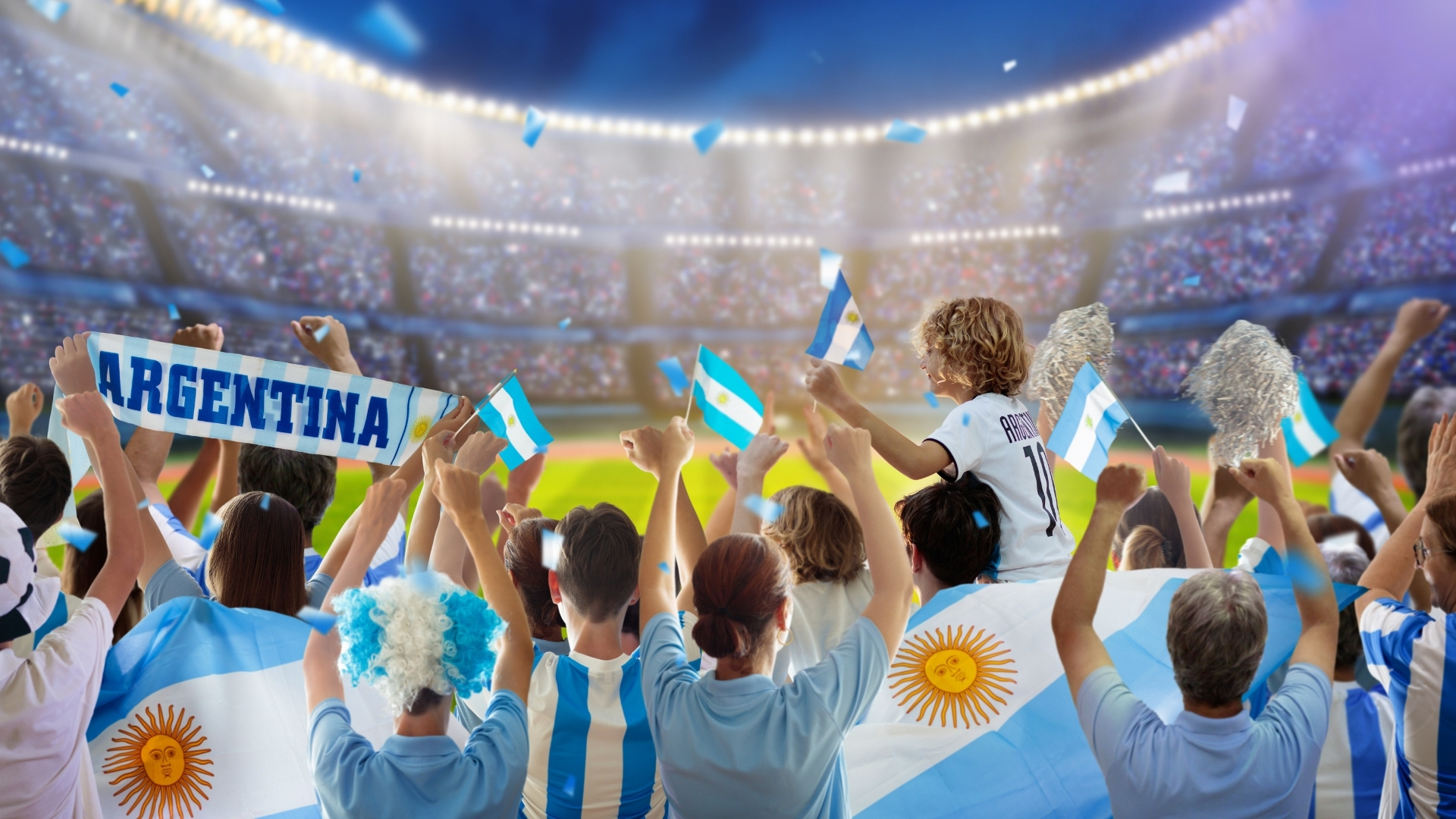
Some matches are played for ninety minutes and then reduced to a statistic. Others, however, survive the result, transcend generations, and become part of the culture of two countries. Argentina versus England belongs to the latter category. Every time the two teams meet again in a World Cup, the match arrives laden with memories, symbols, stories, and emotions that began long before the players took the field.
The new crossover between England and Argentina in the 2026 World Cup semifinals once again places that history at the center of the conversation. The match is scheduled for July 15 in Atlanta and will have a spot in the tournament final as the prize. Argentina arrives as the defending champion, while England attempts to return to a World Cup final and conquer a title they haven't won since 1966.
However, reducing this match to its sporting importance would leave out a large part of what makes it special. The rivalry between the two teams was built through different World Cups, each with its own context and with images that are still part of the collective memory. It is a story that shows that the true value of an event does not depend solely on what happens at the moment, but on how that moment is remembered, interpreted, and passed down over time.
One of the first decisive chapters occurred at the 1966 World Cup in England. In the quarterfinals, the home team eliminated Argentina in a rough and controversial match that left a strong feeling of clash between styles, temperaments, and football cultures. England would go on to win that World Cup, the only one in their history to date, but that encounter left a tension that would reappear years later.
The match that finally transformed the rivalry into legend took place in Mexico in 1986. Argentina and England met again in the quarterfinals, this time at the Azteca Stadium. Diego Armando Maradona scored both Argentine goals in the 2-1 victory, but each became associated with a completely different story. The first was the famous "Hand of God"; the second, an extraordinary individual play that would be recognized as the Goal of the Century. Argentina continued on their path and ended up winning that World Cup.
That match became something much bigger than a result. The images of Maradona dodging opponents, the commentary of the play, and the controversy of the first goal are still circulating four decades later. These are scenes that people who weren't even born in 1986 know perfectly well. That lasting impact demonstrates the power of narratives when they manage to unite emotion, identity, and an unrepeatable moment.
The story added another important chapter in France 1998. Argentina and England faced off in the round of 16 and starred in one of the most intense matches of the tournament. Michael Owen scored a memorable goal for the English, David Beckham was sent off, and the match was ultimately decided by penalties, with Argentina advancing. Once again, the match produced characters, conflicts, images, and narratives capable of transcending the competition.
Four years later, in Korea-Japan 2002, England got its revenge by beating Argentina 1-0 during the group stage. David Beckham, criticized by much of the English press after the 1998 elimination, converted the penalty that decided the match. Football thus completed one of those narrative arcs that seem pre-written: a questioned player became the protagonist of the revenge against the same rival.
The 2026 World Cup now incorporates a completely new chapter. It's not just about remembering Maradona, Beckham, Owen, or past matches. New generations will have the chance to associate the rivalry with other footballers, other images, and another context. The previous history increases the anticipation, but the current match will have to build its own meaning.
From a marketing, branding, and communications perspective, this rivalry offers a very valuable lesson. Memorable brands are not built with a single campaign, just as a historic rivalry is not born from a single match. They are built through the accumulation of consistent experiences, recognizable symbols, and narratives that remain alive over time.
Argentina and England possess visual and cultural identities that can be immediately recognized. The colors of their jerseys, their crests, their footballing styles, and the way their fans experience each match function as branding elements. They don't need to constantly explain who they are because they have built recognition over decades. This is one of the most important aspirations of any commercial identity: to achieve public recognition even before reading its name.
There is also a teaching related to storytelling. People rarely remember a long list of facts, but they do remember stories. The 1986 match is not remembered solely because Argentina won 2-1. It is remembered because it contains protagonists, tension, controversy, beauty, context, and a definitive outcome. It has all the elements of a powerful narrative.
Something similar happens in marketing. A company can list its services, explain features, and publish promotions, but if it doesn't build a recognizable narrative, it will be difficult for people to remember it. Brands that manage to create a connection usually have a clear story about their origin, their purpose, the problems they solve, and how they want to relate to their audience.
The new matchup also demonstrates the power of expectation. Long before the start of the game, media outlets, brands, content creators, and fans had already begun producing conversations around the event. The match hasn't even been played yet, but it's already generating attention, memories, and projections. That ability to build interest before an experience is a central marketing tool.
Companies can apply this principle when preparing a launch, introducing a new service, or communicating a transformation. There's no need to wait until launch day to start telling the story. Anticipation can be built through teasers, related content, conversations, and a narrative that invites the audience to be part of the process.
However, there is an important difference between using and superficially exploiting a cultural event. A brand shouldn't bring up the World Cup solely because it's a popular topic. It needs to find a genuine connection between the event, its identity, and what it can offer its audience. In Pixie Studio's case, the link can emerge by analyzing how identities are constructed, how symbols function, why certain stories endure, and how an experience transforms into collective memory.
Sports also teach us that reputation doesn't solely depend on a single isolated result. Argentina can lose a match and still be a team with a recognized identity. England can go decades without winning the World Cup and remain one of the most important sports brands on the planet. This happens because their value is sustained by a history much broader than a single victory or defeat.
Companies should think about their communication in a similar way. A campaign that doesn't work, a post with little reach, or a launch with moderate results do not completely define a brand. What truly builds reputation is the consistency with which one works over the years, the way in which problems are responded to, and the coherence between what is promised and what is ultimately delivered.
Argentina versus England in the 2026 World Cup will have a winner and a loser from a sporting perspective. But, regardless of the score, the match will once again fuel a story that already belongs to entire generations. New images will be added to those from 1966, 1986, 1998, and 2002, and the narrative will continue to grow.
That is perhaps the most important lesson for marketing: truly valuable brands don't just aim to grab attention for a moment. They aim to build an identity, a community, and a story that can continue to hold meaning long after a campaign ends.
Because ads come and go, platforms change, and trends disappear. But when a story manages to become part of people's memory, it stops being mere communication and becomes culture.